The Future of Smile Restoration: Digital Prosthodontics and Its Impact on Patient Care
By Dr. Divya Mishra, Consultant Prosthodontist
Specialist in Prosthodontics
Introduction
In recent years, technological innovation has transformed nearly every aspect of healthcare — and dentistry is no exception. Among dental specialties, prosthodontics has seen one of the most exciting evolutions, primarily driven by digital technology. From traditional impression materials to advanced digital scanning, computer‑aided design (CAD), and 3D printing, digital prosthodontics is now redefining how we restore smiles and rehabilitate oral function.
In this article, I will explore the current trends in digital prosthodontics, its benefits for both patients and clinicians, emerging research, and how these advancements are shaping the future of dental care.
What Is Digital Prosthodontics?
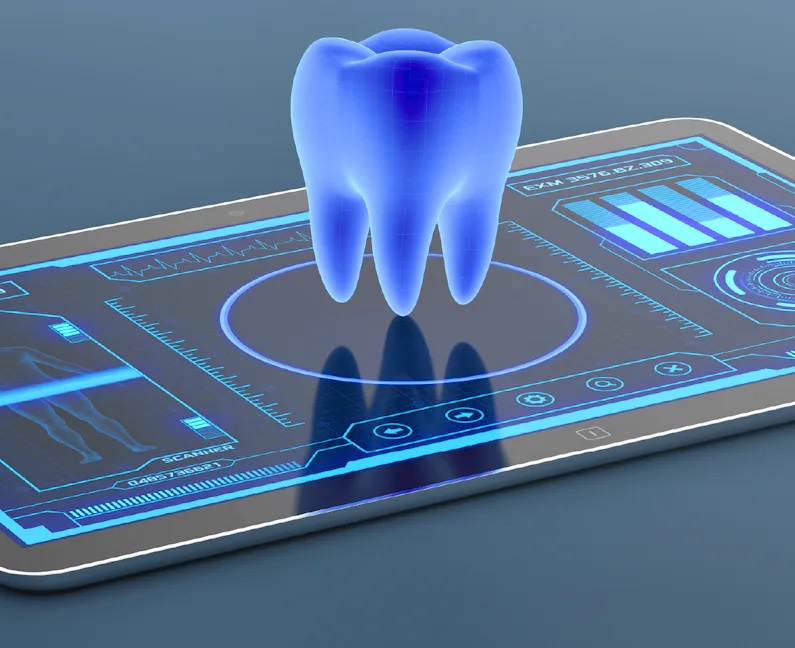
Digital prosthodontics refers to the use of digital technologies — including intraoral scanners, CAD/CAM systems, artificial intelligence (AI), and 3D printing — in the diagnosis, planning, design, and fabrication of prosthetic dental restorations. These innovations replace, enhance, or improve upon traditional analog methods, leading to restorations such as crowns, bridges, dentures, and implant‑supported prostheses that are more accurate, predictable, and patient‑centric.
While prosthodontics has always been at the forefront of restorative dentistry, the integration of digital workflows marks a paradigm shift in how we approach treatment — from start to finish.
Why Digital Prosthodontics Is a Hot Topic in 2026
Digital prosthodontics has gained global attention not just because of new devices, but because it addresses long‑standing clinical challenges:
1. Increased Precision and Fit
Traditional impressions can be uncomfortable and prone to distortion. Digital intraoral scanners capture precise three‑dimensional images of the oral cavity, leading to restorations that fit more accurately. This reduces adjustments, improves longevity, and enhances patient comfort.
2. Faster Turnaround and Efficiency
Historically, making a denture or crown required multiple appointments and days in a dental laboratory. With digital workflows, clinicians can design and manufacture prostheses — sometimes within the same visit — significantly reducing treatment time.
3. Better Patient Experience
Patients today are more informed and have higher expectations. Digital impressions are less invasive, and 3D models allow patients to visualize treatment outcomes before the actual procedure, improving communication and motivation.
4. Integration With Implant Dentistry
Digital planning software enhances implant placement by accurately assessing bone anatomy and prosthetic space. This has resulted in higher success rates and more predictable outcomes, especially in full‑mouth reconstructions.
5. Sustainability
Digital workflows reduce material waste compared to traditional impression materials and plaster models, aligning dentistry with environmental sustainability goals.
Key Technologies Driving Digital Prosthodontics
Intraoral Scanners
Intraoral scanning has become a cornerstone of modern prosthodontics. These handheld devices capture a highly detailed digital impression of the teeth and soft tissues, eliminating the need for traditional putty‑based impressions. For patients with a strong gag reflex or anxiety, this is a game‑changer.
CAD/CAM (Computer‑Aided Design/Computer‑Aided Manufacturing)
CAD/CAM technology allows clinicians to digitally design restorations and send them directly to milling machines or 3D printers. This system ensures precision that was once impossible with manual fabrication and opens the door to same‑day restorations.
3D Printing and Additive Manufacturing
3D printing has expanded beyond models to include final prosthetic devices such as dentures and surgical guides. Materials used today are stronger, more biocompatible, and increasingly esthetic. This means patients no longer need to choose between function and look — they can have both.
Artificial Intelligence (AI) in Prosthodontics
AI is being integrated into treatment planning, allowing algorithms to predict outcomes, optimize design parameters, and even identify potential risks. For clinicians, this means more informed decisions and better long‑term results.
Clinical Applications: What Does This Mean for Patients?
Digital Dentures
One of the most significant advancements in prosthodontics has been digital denture fabrication. Patients who once endured multiple appointments and weeks of waiting can now receive fully functional dentures with fewer visits. Digital dentures not only fit better but can be reprinted if lost or damaged without a complete remake.
Implant‑Supported Prostheses
Implant dentistry stands to benefit immensely from digital planning. Using 3D imaging and software, dental implants can be placed in a way that maximizes function and esthetics while protecting adjacent structures. This precision is particularly crucial in full‑arch rehabilitation cases.
Same‑Day Crowns and Bridges
Thanks to CAD/CAM milling units, many prosthodontic restorations can be delivered in a single appointment. This reduces the need for temporary restorations and eliminates the common inconveniences associated with multiple dental visits.
Enhanced Esthetics and Function
Digital tools allow clinicians to simulate and customize smiles in ways not previously possible. From selecting ideal tooth form to adjusting occlusion for balance and comfort, digital prosthodontics elevates both appearance and function.
Challenges and Considerations
No technology is without limitations. Digital prosthodontics does present challenges:
Learning Curve
Clinicians must invest time in training and mastering digital tools. This requires commitment and often changes established workflows.
Cost of Technology
The initial investment in scanners, CAD/CAM software, and 3D printers can be significant. However, many practices find that increased efficiency and accuracy ultimately offset this cost.
Material Limitations
While digital materials have improved dramatically, not all restorative materials are suitable for digital fabrication yet. Research and development continue to expand the available range.
What the Research Says: Evidence‑Based Outcomes
Multiple studies in peer‑reviewed journals support the clinical advantages of digital prosthodontics:
- Accuracy: Digital impressions consistently show higher trueness and precision compared to traditional methods, particularly in full‑arch scans.
- Patient Satisfaction: Patients report higher comfort and overall satisfaction with digital procedures.
- Predictable Implant Outcomes: Guided implant placement based on digital planning has shown improved prosthetic outcomes and reduced surgical risk.
As technology evolves, clinical evidence continues to reinforce the benefits of digital workflows in prosthodontics.
Looking Ahead: The Future of Prosthodontics
The future of digital prosthodontics is bright and expanding. Some emerging developments include:
Tele‑Prosthodontics
Virtual consultations and remote treatment planning are becoming more common, especially for patients in remote areas.
Bioprinting
Researchers are exploring bioprinting of tissues that could one day regenerate lost periodontal structures or even biological teeth.
Smart Prostheses
Advances in materials science may lead to prosthetic devices with embedded sensors that monitor oral health status — from bite force to temperature changes.
These innovations are not science fiction but tangible advancements already under exploration in laboratories around the world.